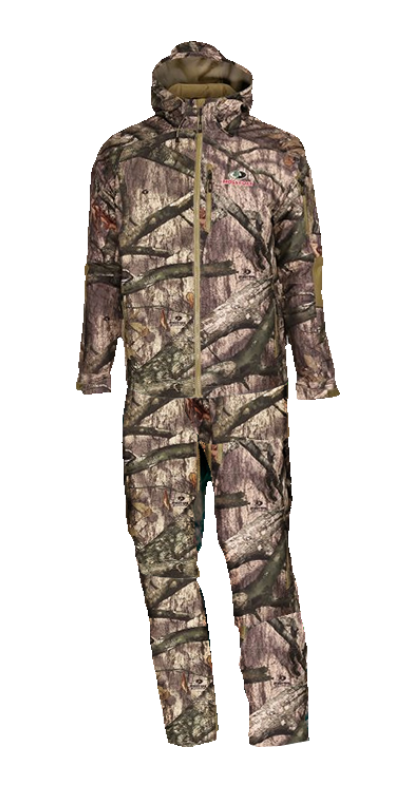
CamoMatrix Pattern DNA
Mossy Oak
Treestand
This pattern stands out most for more spatially concentrated; balanced across pattern scales; and brown / Tan, moderate saturation, strongly warm.
The dominant detected color families are Brown / Tan. Its average color saturation is typical compared with the 247-pattern reference set.
What you may notice:
The amount of visible color intensity is fairly typical of the reference set.
31.1% of the sampled pattern falls in the governed dark tonal range. Its tonal-group separation is within the broad middle of the reference set.
What you may notice:
The pattern does not sit near either brightness extreme of the reference set.
Edge density is typical, average detected edge strength is typical, and the share of qualifying edges classified as hard is typical relative to the reference set.
What you may notice:
Boundary strength is broadly typical of the reference set.
Fine texture density is typical, roughness is typical, and texture uniformity is typical compared with the reference set.
What you may notice:
Texture variation across the pattern is broadly typical of the reference set.
Effective retained-region fragmentation is typical, while average retained-region elongation is typical relative to the reference set.
What you may notice:
The effective division of visible regions is broadly typical.
The analyzer classifies dominant scale as balanced. Fine-scale energy is typical, mid-scale energy is high, and large-scale energy is typical relative to the reference set.
What you may notice:
No single scale band dominates strongly enough to define the pattern by itself.
Spatial information balance is very low, while left-right, top-bottom, and rotational asymmetry are typical, very low, and very low relative to the reference set.
What you may notice:
More of the pattern activity is concentrated into particular portions of the sample.
